
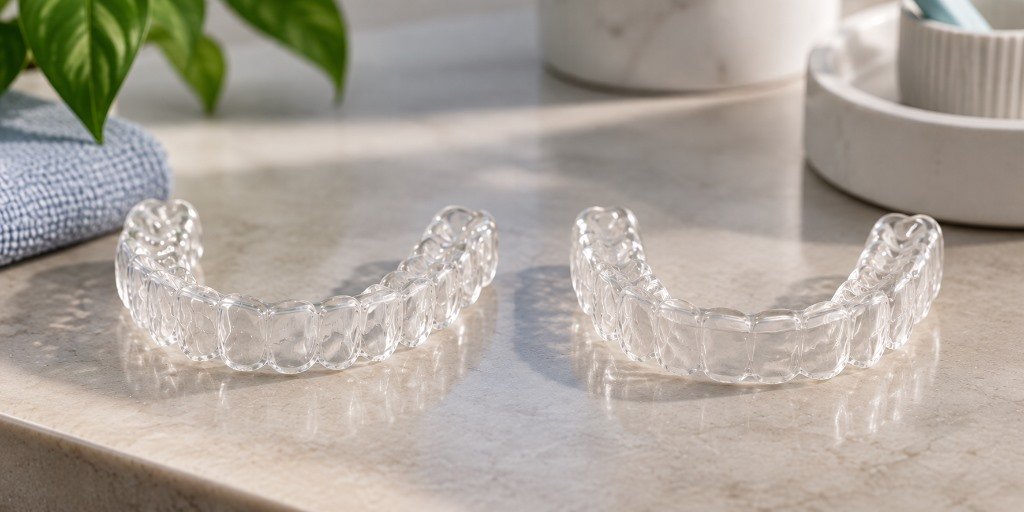
If you have seen clear aligners and clear retainers, you may have wondered whether they are actually the same thing.
They can look very similar, but they are used for different purposes.
The simplest way to remember it is:
Clear aligners are generally used to help move teeth during treatment.
Retainers are generally used to help maintain the position of teeth after treatment.
Here is a closer look at the difference.
What Is a Clear Aligner?
A clear aligner is a removable dental appliance made to fit over the teeth.
During aligner treatment, a series of aligners may be used to gradually move the teeth toward their planned positions.
Each aligner is designed for a particular stage of treatment.
Because they are removable and transparent, clear aligners are often chosen by people who want a less noticeable alternative to traditional braces.
What Is a Retainer?
A retainer is a dental appliance used to help maintain the position of teeth.
After teeth have been moved during orthodontic treatment, they can naturally tend to shift over time.
A retainer helps keep the teeth in their intended position according to the treatment plan.
Retainers can come in different forms, including clear removable retainers and other types designed by dental professionals.
Are Clear Aligners and Retainers the Same?
No.
Although some clear aligners and clear retainers can look very similar, their purpose is different.
A clear aligner is generally part of the process of moving teeth.
A retainer is generally used after or around the end of treatment to help maintain the position of the teeth.
So while they may look like similar transparent trays, they are not interchangeable simply because they look alike.
Can a Retainer Move Teeth?
Retainers are primarily designed to maintain tooth position rather than actively move teeth like an aligner treatment plan.
If a retainer suddenly feels very tight or no longer fits properly, do not assume that it should simply be forced into place.
The fit can change for different reasons, including changes in tooth position or changes to the appliance itself.
If your retainer does not fit as expected, check with your dental professional.
Do You Need a Retainer After Clear Aligners?
In many treatment plans, retainers are used after active tooth movement to help maintain the result.
The exact type of retainer and how often it should be worn depends on the individual's treatment plan and dental professional's instructions.
This is why finishing aligner treatment does not necessarily mean you are finished wearing dental appliances.
How Are They Different?
Clear Aligner
Purpose: Helps move teeth during treatment.
When used: During an aligner treatment plan.
Main role: Gradual tooth movement.
Retainer
Purpose: Helps maintain the position of teeth.
When used: Often after active orthodontic treatment.
Main role: Retention and maintenance.
Do Aligners and Retainers Need Different Care?
Both should be kept clean and stored properly when they are not being worn.
Because they are removable dental appliances, residue can build up on either one if they are not cleaned regularly. Following a consistent routine for daily aligner hygiene or retainer care helps keep both appliances fresh.
The exact cleaning method should follow the appliance manufacturer's instructions.
An ultrasonic cleaner designed for removable dental appliances can be useful for cleaning appliances such as clear aligners and retainers.
If buildup or stains have developed over time, an appliance-compatible cleaning tablet may also be useful as part of a deeper-cleaning routine, provided the product is suitable for the appliance.
Can the Same Cleaner Be Used for Both?
A suitable ultrasonic cleaner can be used for different removable dental appliances, including clear aligners and retainers, provided the appliances are compatible with ultrasonic cleaning.
This can make appliance care simpler, especially for people who use more than one type of removable dental appliance or want to prevent retainer odour from developing.
You can also read our guide on how ultrasonic cleaning works for retainers and mouth guards.
Always check the manufacturer's cleaning instructions before using an ultrasonic cleaner or cleaning tablet.
What About SMILANCE?
SMILANCE Ultrasonic Cleaner is designed for cleaning removable dental appliances such as clear aligners, retainers, mouth guards and dentures.
It can be used as part of a regular cleaning routine for removable dental appliances.
Quick Answer
If you only remember one thing:
Clear aligners are generally used to move teeth during treatment.
Retainers are generally used to help maintain the position of teeth after treatment.
They may look similar, but they serve different purposes.
Frequently Asked Questions
Are clear aligners and retainers the same thing?
No. They can look similar, but clear aligners are generally used to move teeth during treatment, while retainers are generally used to help maintain tooth position.
Do retainers move teeth?
Retainers are primarily designed to maintain the position of teeth rather than actively move them as part of an aligner treatment plan.
Do I need a retainer after clear aligners?
Many treatment plans include retainers after active tooth movement. The type of retainer and wearing schedule depend on the individual's treatment plan and dental professional's instructions.
Can I use my retainer instead of an aligner?
No. A retainer and an aligner have different purposes and should not be treated as interchangeable appliances.
Can I clean my aligner and retainer in the same cleaner?
A suitable ultrasonic cleaner can be used for different removable dental appliances, including clear aligners and retainers, when the appliances are compatible with ultrasonic cleaning. Always follow the manufacturer's cleaning instructions.
This article is for general information about dental-appliance care. For instructions specific to your aligners or retainers, follow the guidance provided with your appliance or speak with your dental professional.