
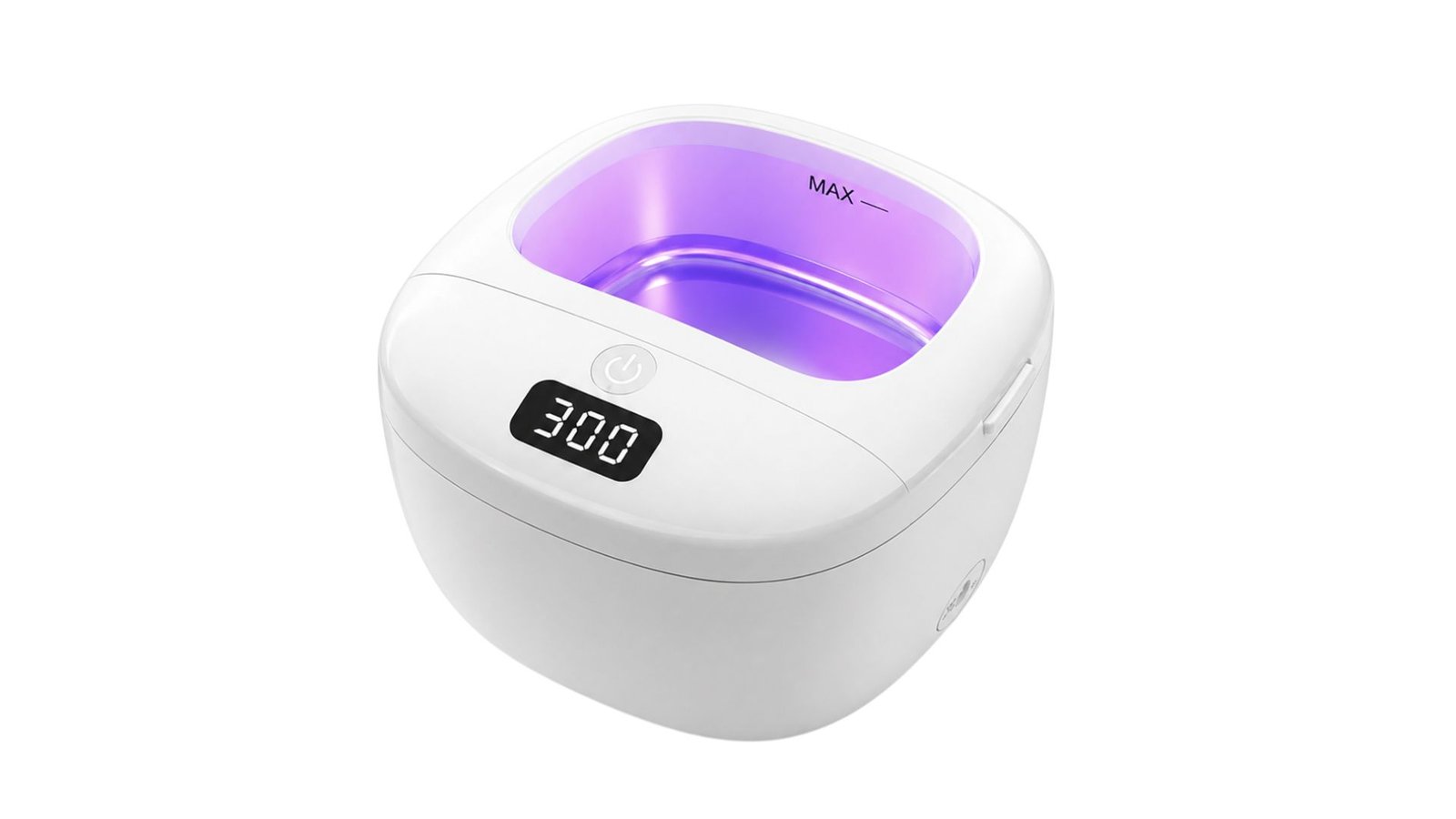
When cleaning oral appliances such as clear aligners, retainers, mouthguards, and dentures, patients often ask whether an ultrasonic cleaner is truly necessary or if a manual toothbrush suffices. Materials science and clinical dental hygiene provide a clear comparison.
The Physics of Ultrasonic Cavitation
An ultrasonic cleaner operating at 45,000 Hz (45kHz) transmits high-frequency sound waves through an aqueous bath. These acoustic vibrations induce microscopic alternating pressure cycles, generating millions of sub-micron vacuum bubbles in a process called cavitation.
When these micro-bubbles encounter the surface of your dental appliance, they implode with immense local energy. This creates micro-jets of fluid that dislodge plaque, salivary pellicle, and bacterial biofilms from deep crevices, undercuts, and attachment wells that are physically inaccessible to brush bristles.
The Pitfalls of Manual Scrubbing
| Cleaning Parameter | Manual Toothbrushing | 45kHz Ultrasonic Cavitation |
|---|---|---|
| Surface Abrasiveness | High (causes micro-grooves and cloudiness) | Zero (non-abrasive fluid dynamics) |
| Access to Undercuts | Poor (bristle diameter exceeds micro-spaces) | Complete (liquid penetrates all geometries) |
| Biofilm Disruption | Partial / uneven mechanical friction | Uniform microscopic disruption |
| Wear on Polymer | Progressive surface dulling | Preserves original surface finish |
Preserving Appliance Transparency and Fit
Orthodontic aligners rely on precise mechanical contact with tooth attachments to transfer calculated tooth-moving forces. Brushing can erode tiny internal retention wells or distort delicate borders over time. Ultrasonic cleaning relies solely on fluid cavitation, exerting no mechanical bending forces on the appliance while achieving a superior hygienic standard.
Safety Considerations
Always ensure your ultrasonic unit operates within safe frequency thresholds (such as 40kHz to 45kHz) designed for delicate dental appliances, and maintain proper water levels to avoid overheating the transducer.