
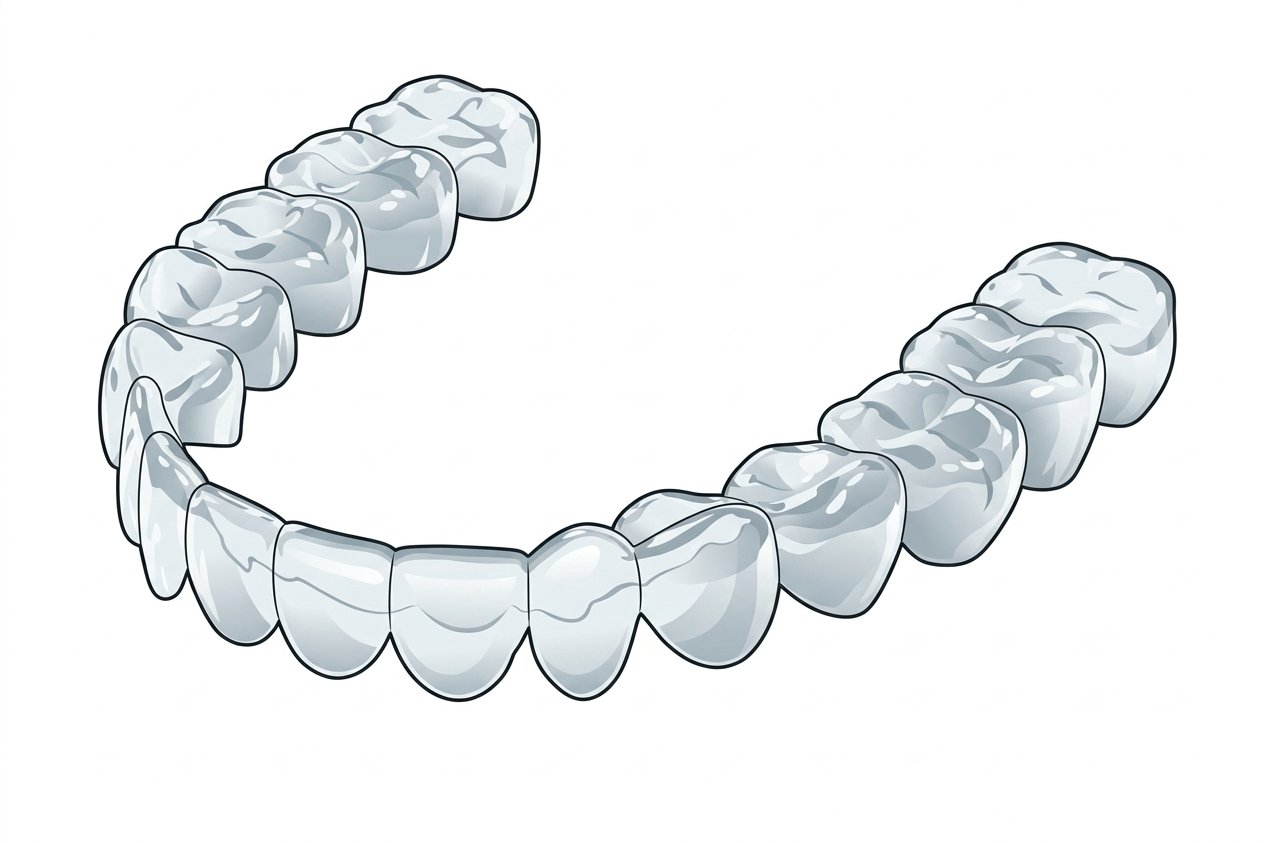
Clear aligners represent a major advancement in discreet orthodontics, but maintaining their optical clarity and oral hygiene requires consistent, disciplined care. Because aligners fit snugly against your teeth for 20 to 22 hours each day, they trap saliva, dead epithelial cells, and plaque bacteria against your enamel if not cleaned properly.
Why Traditional Brushing Can Damage Clear Aligners
Many aligner wearers instinctively reach for their regular toothbrush and whitening toothpaste. However, dental plastics (such as polyurethane and medical-grade copolyester) have a significantly softer surface hardness than tooth enamel. Abrasive silica particles found in standard toothpastes create microscopic micro-grooves across the aligner surface.
These micro-scratches lead to two common issues:
- Loss of Transparency: Micro-abrasions scatter light, causing the aligner to turn cloudy, opaque, and visibly dull.
- Bacterial Colonization: Micro-grooves provide a sheltered habitat for oral bacteria, causing persistent morning odors and yellow discoloration that cannot be rinsed away.
Step-by-Step Daily Cleaning Protocol
- Rinse Immediately Upon Removal: Whenever you take out your aligners to eat or drink, rinse them immediately under lukewarm or cool tap water. Never allow saliva to dry on the trays.
- Avoid Hot Water: Heat is the primary enemy of orthodontic thermoplastics. Water temperatures exceeding 45°C (113°F) can warp the precision geometry, compromising your orthodontic tooth movement.
- Gentle Mechanical Cleansing: Use an ultra-soft surgical toothbrush dedicated solely to your trays, using mild, fragrance-free liquid soap or lukewarm water without paste.
- Daily Deep Cleaning with Ultrasonic Cavitation: Submerge your trays in water within a dedicated 45kHz ultrasonic cleaner for a 3-minute cycle. Ultrasonic soundwaves generate microscopic vacuum bubbles that implode against the plastic, dislodging plaque from deep crevices where bristles cannot reach.
Practical Tips for Clear Aligner Hygiene
- Brush and floss your teeth before re-inserting aligners after every meal to avoid trapping food particles against enamel.
- Always carry a compact travel case so aligners never touch unhygienic restaurant tables or get wrapped in napkins.
- Keep a dedicated travel-ready cleaning routine when working or commuting.
Common Mistakes to Avoid
- Never use hot or boiling water: Even a few seconds in hot water can warp the precise fit engineered by your orthodontist.
- Avoid colored mouthwashes: Rinses with artificial blue, green, or red dyes can permanently stain transparent plastic.
- Do not soak in harsh bleach or alcohol: Alcohol degrades the polymer matrix, making aligners brittle and prone to cracking.
Safety Considerations
If your aligners develop a cracked edge, sharp border, or visible deformation from heat, do not attempt to bend them back into shape. Contact your treating dental professional promptly for advice on whether to proceed to your next tray or use a temporary retainer.