
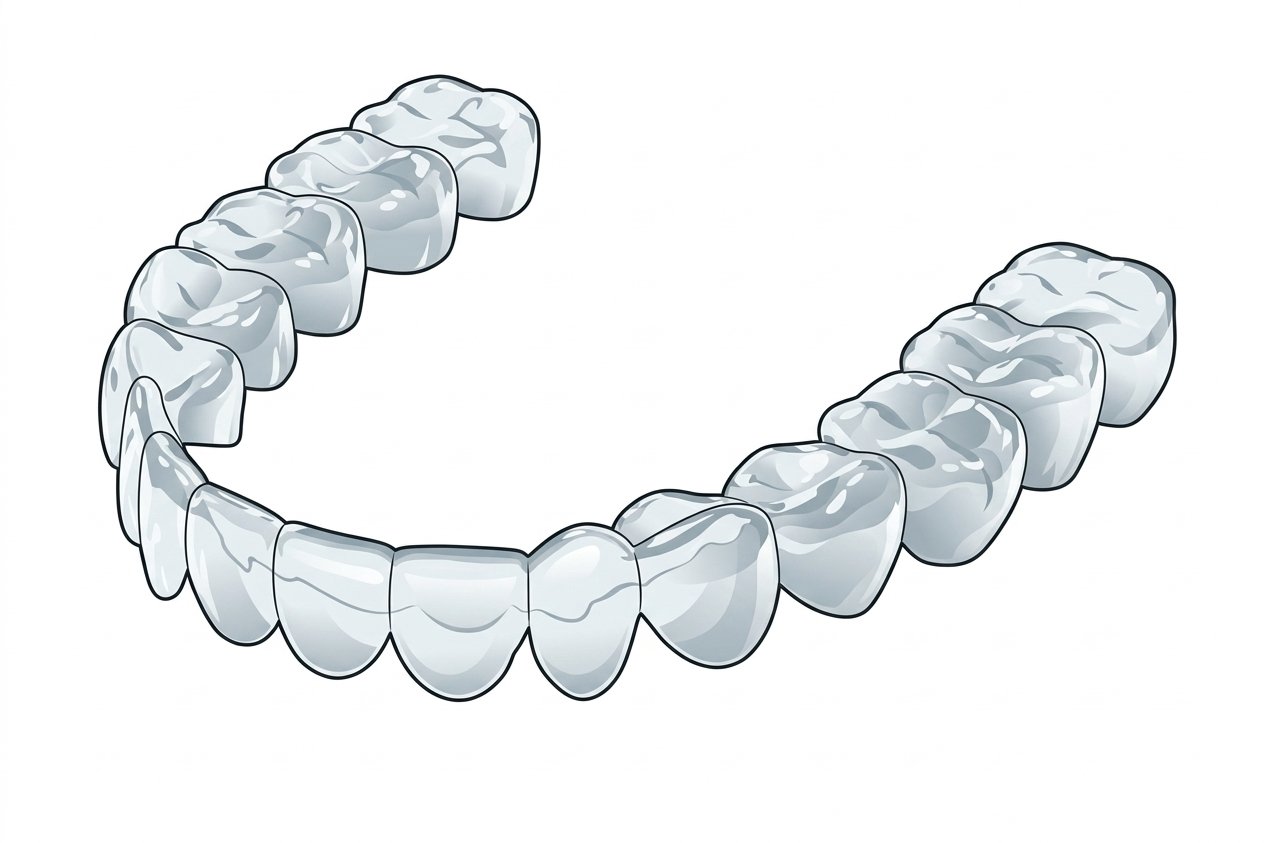
While clear aligners are typically replaced every 1 to 2 weeks, orthodontic retainers (such as Essix, Vivera, or Hawley appliances) must last for months or years. This extended lifespan makes them far more susceptible to stubborn calcium carbonate tartar (calculus) buildup and chronic bacterial colonization.
Types of Retainers and Their Care Requirements
- Clear Plastic Retainers (Essix / Vivera): Vacuum-formed thermoplastic. Sensitive to heat and abrasives. Ultrasonic cleaning with cool water is the safest and most thorough daily method.
- Wire & Acrylic Retainers (Hawley): Combines acrylic resin with stainless steel wire. Can tolerate specialized effervescent retainer tablets, but porous acrylic can harbor odors if not cleansed daily.
The Two-Tier Retainer Cleaning Routine
Tier 1: Daily Maintenance (Morning & Night)
Immediately after taking your retainer out in the morning, rinse off saliva under cool tap water. Place it in an ultrasonic cleaner filled with clean water for a 3 to 5-minute cycle to break apart overnight salivary pellicle before it calcifies into hard tartar.
Tier 2: Weekly Deep De-Scaling
Over time, salivary minerals cause faint white chalky deposits. Once a week, dissolve an orthodontic-grade retainer cleansing tablet or a splash of distilled white vinegar in lukewarm water within your ultrasonic tank. The combination of gentle chemical dissolution and 45kHz cavitation effortlessly breaks down calcified mineral deposits without manual scraping.
Retainer Material Ultrasonic Compatibility
Patients often ask whether acoustic cavitation is safe for custom retainers. Because ultrasonic soundwaves operate at a microscopic fluid level without bending force or friction, it is completely non-abrasive:
| Retainer Type | Material | Ultrasonic Safety | Recommended Duration |
|---|---|---|---|
| Essix / Vivera | Thermoplastic Polymer | Completely Safe | 3 minutes daily (cool water) |
| Hawley Retainer | Acrylic & Stainless Wire | Completely Safe | 3 to 5 minutes daily |
| Permanent Bonded Wire | Fixed Lingual Wire | N/A (Fixed in mouth) | Use interdental brushes |
Common Retainer Cleaning Mistakes
- Scraping with sharp tools: Never try to scrape white tartar off with tweezers or pins. You will scratch the plastic, creating deeper crevices for bacteria.
- Using boiling water: Heat warps both thermoplastic trays and acrylic plates, ruining the orthodontic fit. Always keep water below 40°C (104°F).
- Soaking in colored mouthwash: Mouthwashes containing alcohol can dry out acrylic and dye clear retainers permanently.
Safety Considerations
Always inspect your retainer for micro-cracks or bent wire clasps. A cracked retainer cannot properly hold your teeth in alignment. If you suspect damage, consult your orthodontist before continuing wear.