
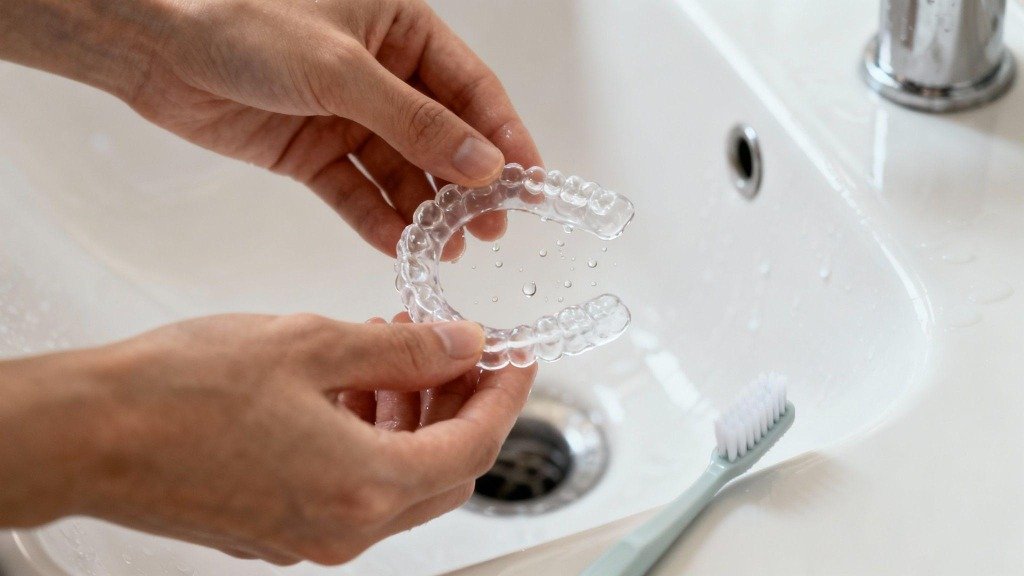
You take your retainer out, give it a clean and put it back in its case.
But when you open the case again, there it is — that unpleasant smell.
If this sounds familiar, you're not the only one.
A retainer spends hours in a warm, moist environment and can collect residue over time. Even if you're cleaning it regularly, some buildup can be harder to remove than what you can see.
So why does a retainer sometimes still smell after cleaning?
Let's look at the common reasons.
1. There May Still Be Residue on the Retainer
A quick rinse can remove loose particles, but it doesn't necessarily remove everything that has collected on the surface.
Over time, residue can build up around the edges, grooves and other areas of the retainer.
This can be one reason a retainer starts to smell even though it looks reasonably clean.
If you notice a film, cloudiness or an unpleasant taste along with the smell, it may be time to give your retainer a more thorough clean.
2. Your Retainer Case Could Be the Problem
This one is easy to overlook.
You may have cleaned the retainer, placed it straight into the case and assumed everything is fine.
But if the case itself has residue or an unpleasant smell, that smell can transfer back to the retainer.
Take a look at the inside of your case.
If it feels sticky, has visible residue or smells when the retainer isn't inside, clean the case as well and allow it to dry properly before using it again.
A clean retainer needs a clean place to be stored.
3. Moisture Can Get Trapped
Retainers are often put straight into their case after being rinsed.
If there is still a lot of moisture on the appliance and the case is closed, it stays there until you open it again.
After cleaning your retainer, make sure excess water has been removed before storing it.
Keeping both the retainer and its case clean and reasonably dry can help keep the routine fresher.
4. The Retainer May Need More Than a Quick Clean
Sometimes the problem isn't that you're cleaning your retainer incorrectly.
It may simply need a more thorough cleaning than a quick rinse can provide.
This is especially worth considering if:
- the smell keeps coming back
- the retainer has started looking cloudy
- you can see a layer or film on it
- the smell returns shortly after cleaning
- the retainer has been used for a long time
A deeper cleaning method can help remove residue from areas that are difficult to reach during a quick everyday clean.
Always make sure the cleaning method you use is suitable for your particular retainer.
5. The Retainer Itself May Be Getting Old
Retainers don't stay exactly the same forever.
With regular use, the material can develop small scratches, wear or changes in appearance.
If your retainer has become noticeably rough, damaged, cracked, cloudy or difficult to keep fresh even with regular cleaning, it may be worth having it checked.
Don't try to repair a damaged retainer yourself.
If you're unsure whether the appliance is still in good condition, your dental professional can check it.
What Can You Do If Your Retainer Smells?
Start with the basics.
Clean the retainer.
Clean the case.
Rinse the retainer properly.
Don't store it dirty or covered in residue.
And if your normal routine isn't enough, consider a cleaning method specifically designed for removable dental appliances.
The important part is to use a method that is suitable for your type of retainer and follow the instructions for the appliance or cleaning product.
Can an Ultrasonic Cleaner Help With a Smelly Retainer?
This is one reason people look at ultrasonic cleaners when their normal retainer-cleaning routine isn't enough.
An ultrasonic cleaner uses high-frequency sound waves in water to create tiny cleaning movements around the appliance.
The idea is to help clean around areas that can be difficult to reach with simple rinsing.
It isn't a replacement for following the care instructions for your particular retainer, and it shouldn't be treated as a way to fix a damaged appliance.
But for someone who wears a removable retainer regularly, a dedicated dental-appliance cleaner can be a convenient addition to their routine.
SMILANCE Ultrasonic Cleaner is designed for removable dental appliances including retainers, clear aligners, dentures and mouth guards.
How Can You Stop Your Retainer From Smelling Again?
Once you've got the smell under control, the easiest thing is to keep your routine consistent.
Rinse the retainer when you remove it.
Clean it regularly.
Keep the storage case clean.
Don't leave the appliance sitting in residue or dirty water.
And don't use very hot water or random household cleaning chemicals on it.
If you're using a dedicated cleaning product or appliance, follow its instructions rather than assuming that the same method works for every type of retainer.
What If My Retainer Still Smells After Cleaning?
If you've cleaned both the retainer and its case properly and the smell keeps returning, don't just keep adding stronger cleaning products.
Check the retainer for:
- cracks
- rough areas
- unusual cloudiness
- damage
- changes in shape
- changes in fit
If something doesn't look or feel right, have it checked by your dentist or orthodontist.
Sometimes the problem isn't simply about cleaning.
The Simple Takeaway
A smelly retainer doesn't always mean you're doing something wrong.
There may be residue on the appliance, buildup in areas that are difficult to clean, moisture trapped in the case, or an old or damaged retainer.
Start by looking at both the retainer and the case, then consider whether your current cleaning routine is actually giving the appliance a thorough clean.
And if you wear your retainer regularly, having a dedicated way to clean your dental appliances can make the routine much easier.
SMILANCE Ultrasonic Cleaner is made for everyday cleaning of removable dental appliances.
This article is for general information about dental-appliance care. For advice specific to your retainer, follow the instructions provided with your appliance or speak with your dental professional.
Frequently Asked Questions
Why does my retainer smell even after cleaning?
A retainer can still smell if residue or buildup remains on the appliance, if the storage case is dirty, or if moisture remains trapped during storage.
Why does my retainer smell worse when I open the case?
A closed case can hold moisture and odour. Check whether both the retainer and case are clean before storing the appliance.
Can an ultrasonic cleaner help clean a smelly retainer?
An ultrasonic cleaner can be used for some removable dental appliances, but compatibility depends on the retainer and its care instructions. Always check before using one.
How often should I clean my retainer?
Retainers should be cleaned regularly as part of normal appliance care. The exact routine depends on the type of retainer and the instructions provided with it.
Should I replace my retainer if it smells?
Not necessarily. First check the retainer and its case and review your cleaning routine. If the smell persists or the retainer is damaged, cracked or no longer fits properly, have it checked by your dental professional.